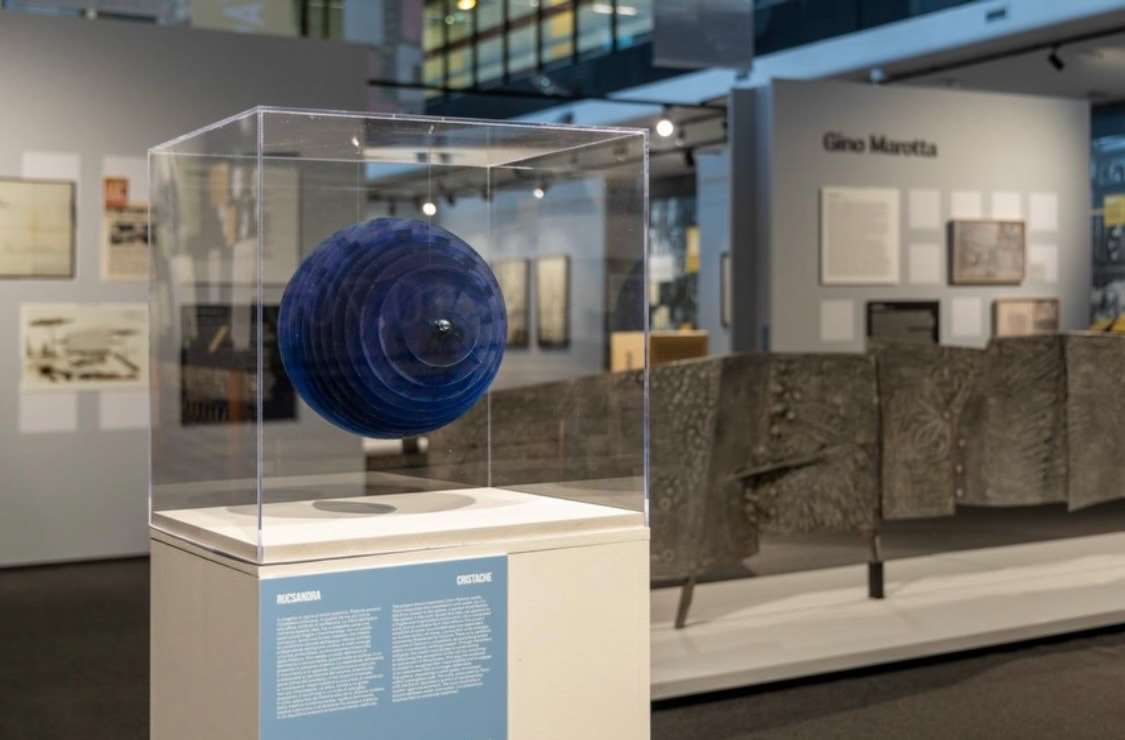
FLOWING
INSPIRED BY PLATO'S SOLIDS, THE WORK LINKS THE ICOSAHEDRON TO WATER, TRADITIONALLY ASSOCIATED WITH PERFECTION AND THE SPHERE.
HERE, THE SPHERE APPEARS FRAGILE AND FRAGMENTED, REFLECTING THE CURRENT VULNERABILITY OF WATER AS A LIMITED RESOURCE SHAPED BY HUMAN ACTIONS.
ITS FORM OSCILLATES BETWEEN UNITY AND FRACTURE, WITHOUT A FIXED STATE OF COMPLETION OR COLLAPSE. THE VIEWER'S MOVEMENT AND GAZE ACTIVELY CONSTRUCT OR DISSOLVE THE PERCEPTION OF THE VOLUME, EMPHASIZING SHARED RESPONSIBILITY.
ENCLOSED WITHIN A PLEXIGLASS CUBE, PLATO'S SYMBOL OF EARTH, THE SPHERE CREATES A TENSION BETWEEN WATER AND MATTER IN A CONSTANTLY SHIFTING BALANCE.
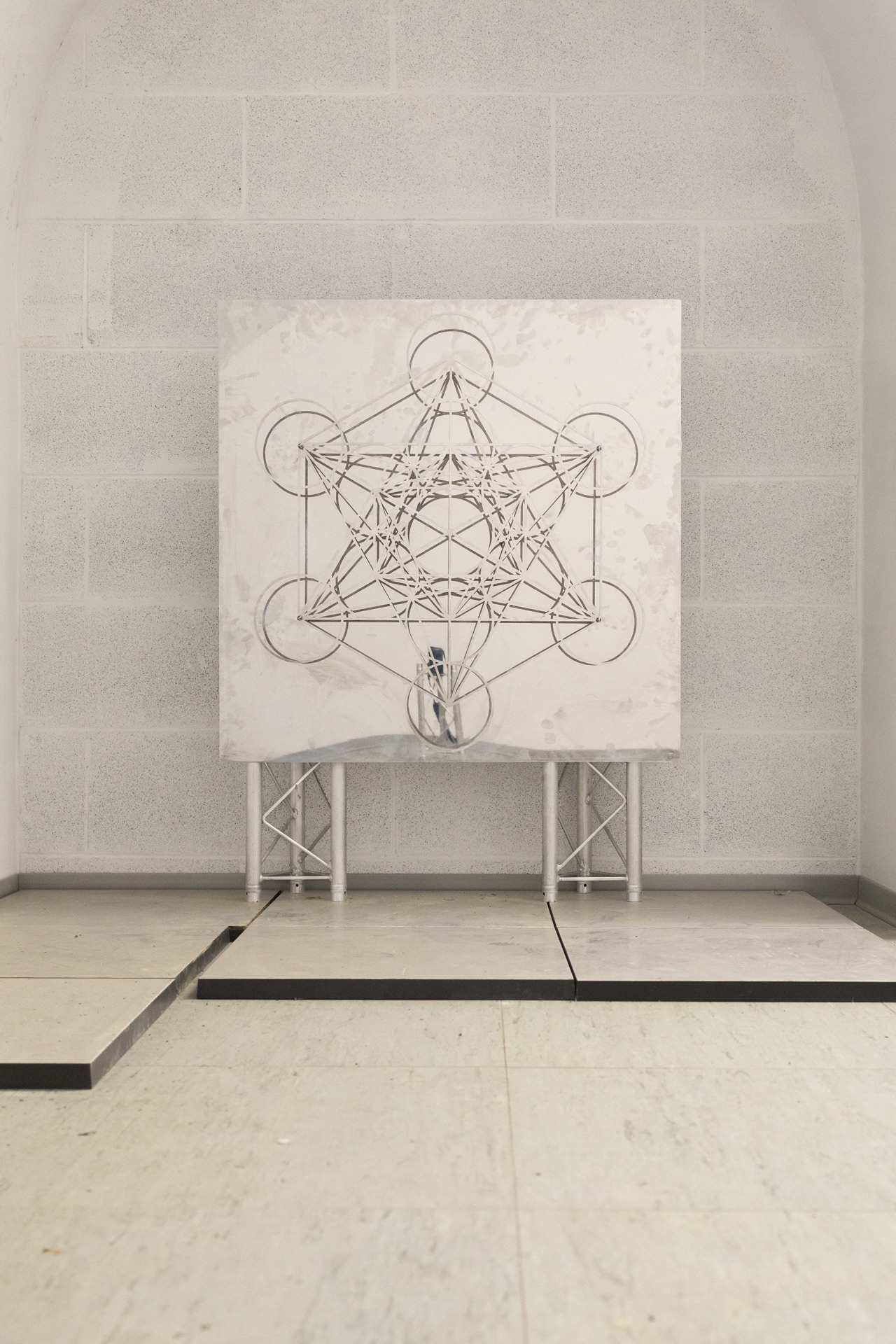
METALINE
Continuing the research initiated with Flowing, Metaline investigates the relationship between perception and the creation of reality, proposing the future as an active process
rather than a representation.
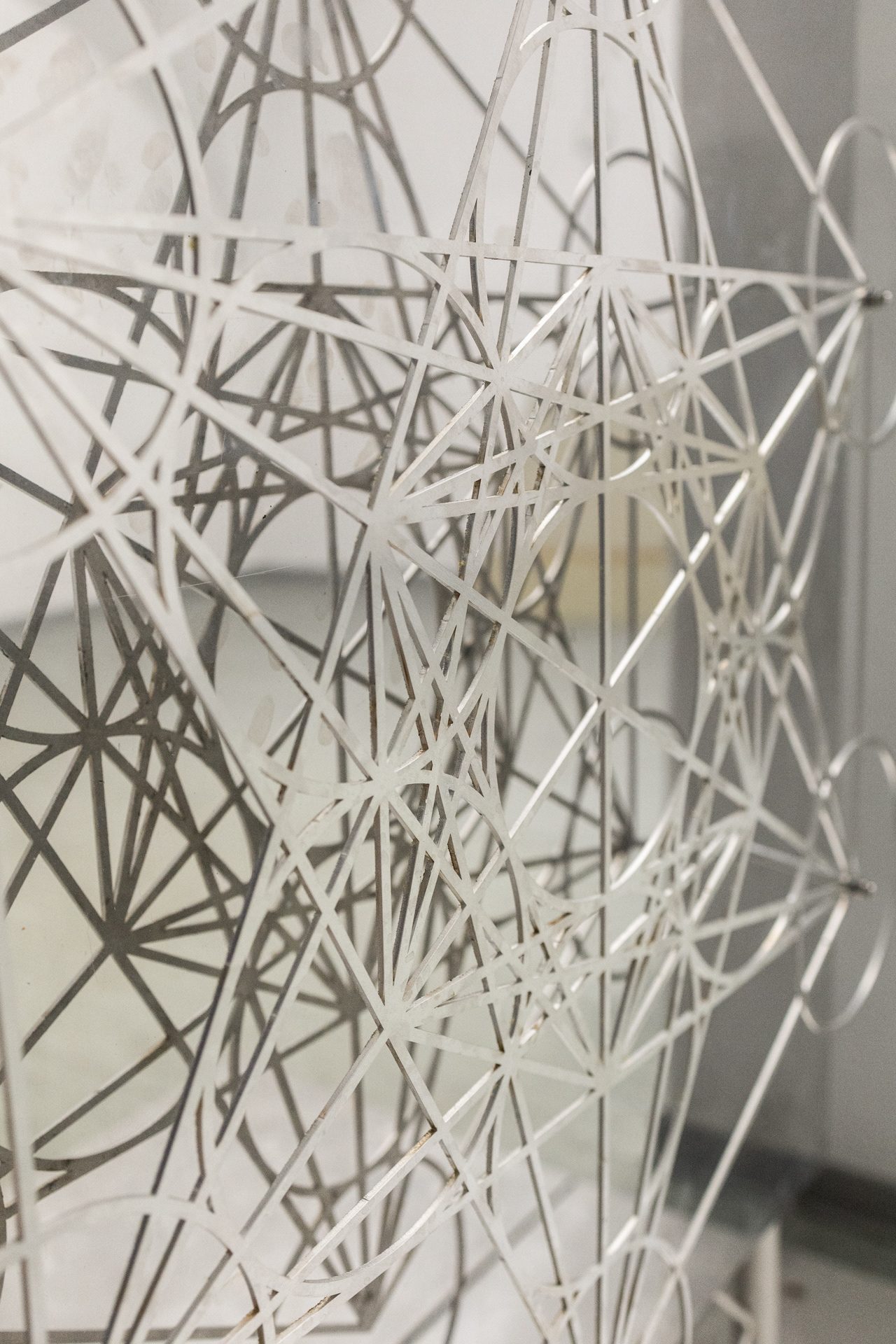
The geometric composition is based on thirteen interconnected circles whose centers are linked by straight lines inspired by the geometry of the Platonic solids, revealing a shared geometric matrix underlying natural forms.
The reflective surface inevitably incorporates space, light, architecture, and the viewer into the work, making the observer an active component of the composition.
Metaline transcends the linearity of both time and the two-dimensional line, opening a three-dimensional construction of the future in space. The future emerges as a constantly evolving field of relationships, activated through the interaction of matter, space, and the viewer.